

Over 80 percent of users say they trust search engines to guide their choices, yet few realize just how complex those trust signals really are. In the world of iGaming, search engine trust shapes not only rankings but real business outcomes. Understanding the factors that build or break this digital reputation can give your platform a clear edge, helping you stand out in one of the most competitive online landscapes.
Table of Contents
- Defining Search Engine Trust Fundamentals
- Variations Of Trust: Domain & Page Levels
- SEO Trust Signals And E‑E‑A‑T Compliance
- Technical And UX Trust Foundations
- Trust Risks And Compliance Pitfalls
- Building Trust In iGaming SEO
Key Takeaways
| Point | Details |
|---|---|
| Trust as a Metric | Search engine trust evaluates content quality, relevance, and authenticity beyond binary metrics, affecting search visibility significantly. |
| E-E-A-T Framework | The E-E-A-T (Experience, Expertise, Authoritativeness, Trustworthiness) framework is crucial in iGaming SEO, emphasizing the need for credible, responsible content. |
| Domain vs. Page Trust | Search engines assess both domain trust and page trust, with distinct signals influencing overall search performance and credibility. |
| Proactive Compliance | Effective trust-building in iGaming requires ongoing compliance with regulations and transparency, addressing potential risks to maintain user confidence. |
Defining Search Engine Trust Fundamentals
Search engine trust represents a sophisticated digital ecosystem where algorithms assess webpage credibility through complex, multifaceted signals. At its core, trust is not just a binary metric but a nuanced evaluation of content quality, relevance, and authenticity. Think of it like a digital reputation score that determines how prominently your content appears in search results.
The concept of search engine trust originates from advanced algorithms like TrustRank, which systematically differentiate between genuine, valuable webpages and potential spam content. As our guide on AI and reviews reveals, search engines employ sophisticated mechanisms to validate digital content’s trustworthiness. These mechanisms analyze multiple signals:
- Backlink quality and diversity
- Content originality and depth
- Website security and technical infrastructure
- User engagement metrics
- Domain age and historical performance
In the iGaming sector, trust signals become exponentially more critical. Search engines scrutinize content with heightened precision, understanding that gambling-related websites carry inherent risks. They look for indicators that demonstrate responsible information, regulatory compliance, and user protection. This means beyond traditional SEO metrics, iGaming content must exhibit:
- Clear, transparent information
- Verifiable credentials
- Responsible gaming references
- Authoritative external citations
- Consistent, professional presentation
Research underscores the psychological dimension of digital trust. A recent large-scale experiment revealed that users’ trust in search results significantly depends on design elements and perceived credibility. Interestingly, even when reference links might be incorrect, their mere presence increases user confidence—highlighting the delicate balance between algorithmic assessment and human perception.
Variations Of Trust: Domain & Page Levels
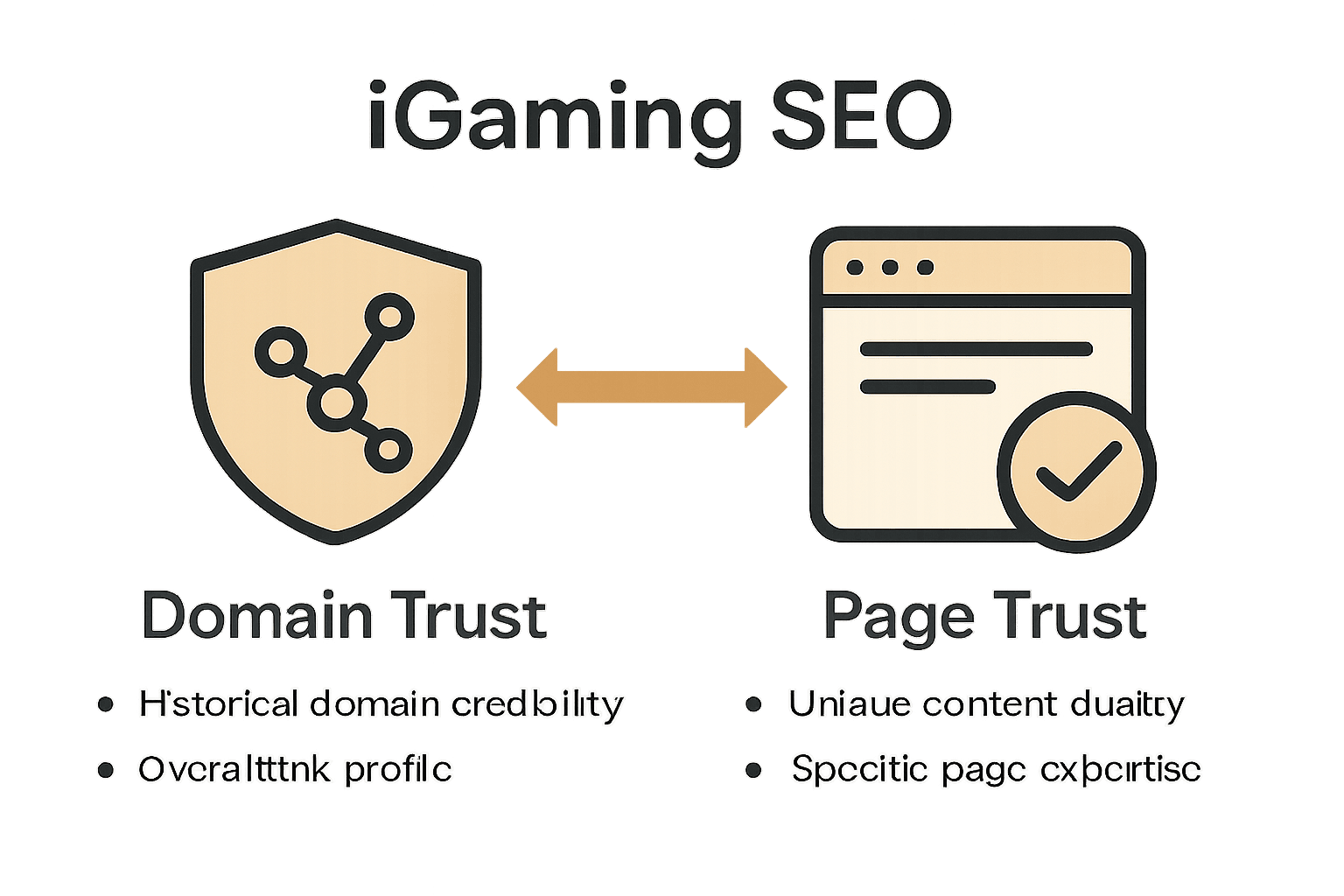
Search engines evaluate digital trust through a sophisticated multi-layered approach that distinguishes between domain trust and page trust. While these concepts are interconnected, they represent distinct assessment mechanisms that significantly impact a website’s search visibility. Think of domain trust as the overall reputation of your entire digital property, while page trust acts like individual reputation credits for specific content pieces.
At the domain level, search engines analyze comprehensive signals that demonstrate long-term credibility. These include:
- Historical website performance
- Consistency of content quality
- Age of domain registration
- Overall link profile strength
- Technical infrastructure reliability
- Regulatory compliance indicators
Page-level trust, conversely, operates with more granular precision. As our AI engagement framework suggests, individual pages are scrutinized for unique trust signals that might differ from the broader domain reputation. A single high-quality page can elevate overall domain standing, while low-quality pages can potentially diminish trust.
The sandbox effect introduces an intriguing dynamic to trust evaluation. New websites often experience temporary ranking suppression as search algorithms methodically assess their trustworthiness. This probationary period allows search engines to distinguish between potentially legitimate new sites and short-lived spam domains. For iGaming platforms, this means a strategic, patient approach to building digital credibility is paramount. Consistently producing authoritative, transparent content becomes the primary mechanism for gradually establishing and expanding search engine trust.

SEO Trust Signals And E‑E‑A‑T Compliance
In the intricate world of iGaming SEO, E-E-A-T (Experience, Expertise, Authoritativeness, Trustworthiness) has evolved into the cornerstone of digital credibility. This framework goes beyond traditional ranking factors, demanding a holistic approach to content creation that proves your platform’s genuine value and reliability. Think of E-E-A-T as a comprehensive trust passport that search engines use to validate your website’s worthiness.
For iGaming platforms, E-E-A-T compliance requires a strategic, multi-dimensional approach. Trust signals become paramount, encompassing elements that demonstrate professional competence and user protection. Key indicators include:
- Transparent author credentials
- Verifiable industry certifications
- Clear responsible gaming statements
- Comprehensive, accurate content
- Professional design and user experience
- Active regulatory compliance disclosures
Experience emerges as a critical differentiator in the iGaming landscape. Browse our comprehensive blog archives to understand how nuanced content can transform user perception. Search engines now prioritize first-hand insights, practical knowledge, and demonstrable understanding of user challenges. This means moving beyond generic information to provide genuine, actionable guidance that reflects deep industry understanding.
Compliance isn’t just about meeting minimum standards—it’s about proactively building a digital ecosystem that prioritizes user trust. Platforms must develop content strategies that seamlessly blend technical expertise with empathetic communication, creating an environment where users feel informed, protected, and genuinely supported throughout their iGaming journey.
Technical And UX Trust Foundations
In the intricate landscape of iGaming SEO, technical trust foundations represent the critical infrastructure that transforms user interactions from mere transactions to meaningful, secure experiences. These foundations extend far beyond traditional website performance, encompassing a holistic approach to digital reliability that search engines meticulously evaluate. Imagine your website as a digital fortress—where every technical element serves as a strategic defense mechanism against user doubt and algorithmic scrutiny.
Key technical trust signals that search engines prioritize include:
- Website loading speed and performance
- Mobile responsiveness and adaptive design
- SSL security and data protection protocols
- Clear navigation and intuitive user interfaces
- Robust privacy policy and transparent data handling
- Consistent and accurate content delivery
Explore insights from industry experts to understand how nuanced technical implementations can dramatically enhance user perception. Research underscores the critical role of user experience (UX) in establishing digital trust. Modern search algorithms increasingly recognize that technical excellence isn’t just about functionality—it’s about creating seamless, intuitive interactions that make users feel genuinely supported and protected.
The intersection of technical performance and user trust becomes particularly pronounced in high-stakes industries like iGaming. Platforms must go beyond mere compliance, developing sophisticated UX strategies that anticipate user needs, mitigate potential anxieties, and demonstrate an unwavering commitment to transparency. This means designing interfaces that are not just visually appealing, but fundamentally reassuring—where every interaction reinforces the platform’s reliability and user-centric approach.
Trust Risks And Compliance Pitfalls
In the high-stakes world of iGaming SEO, trust risks represent more than mere technical challenges—they are potential landmines that can instantly demolish years of carefully constructed digital reputation. The complex landscape of search engine algorithms and regulatory requirements demands a proactive, nuanced approach to identifying and mitigating potential compliance vulnerabilities. Imagine navigating a treacherous digital terrain where one misstep could trigger catastrophic ranking penalties or regulatory sanctions.
The most critical trust risks in iGaming SEO emerge from several key domains:
- Misleading content and false advertising
- Inconsistent age verification mechanisms
- Opaque bonus terms and conditions
- Inadequate responsible gaming disclosures
- Manipulation of search engine ranking signals
- Non-transparent financial transaction reporting
Is search engine submission truly necessary to understand the intricate compliance landscape? The search engine manipulation effect (SEME) reveals the profound psychological impact of search rankings, underscoring how even subtle algorithmic manipulations can erode user trust. This phenomenon goes beyond technical metrics—it represents a fundamental breach of the implicit contract between platforms and users.
Compliance is not a static checklist but a dynamic, ongoing commitment to search neutrality. iGaming platforms must develop sophisticated, adaptive strategies that anticipate regulatory shifts, technological changes, and evolving user expectations. This means creating transparent systems that not only meet current standards but proactively demonstrate a genuine commitment to user protection, fair play, and responsible digital engagement. Your platform’s trustworthiness becomes your most valuable competitive asset—one that cannot be artificially manufactured but must be meticulously cultivated through consistent, principled action.
Building Trust In iGaming SEO
Building trust in iGaming SEO is a sophisticated art form that transcends traditional digital marketing strategies. Trust architecture represents a comprehensive approach where every digital touchpoint becomes an opportunity to demonstrate credibility, transparency, and user commitment. Successful platforms understand that trust is not a static attribute but a dynamic ecosystem constantly being evaluated by both users and search algorithms.
Key strategies for constructing robust trust foundations include:
- Implementing comprehensive age verification systems
- Providing crystal-clear terms and conditions
- Developing transparent responsible gaming resources
- Creating educational content about gaming practices
- Maintaining consistent, accurate information
- Showcasing verified regulatory compliance credentials
Discover how strategic SEO can transform organic performance through meticulous trust-building techniques. The research underscores a critical insight: algorithmic trust is fundamentally human-centric. Search engines increasingly prioritize platforms that demonstrate genuine user care, moving beyond mere technical compliance to create meaningful, supportive digital experiences.
Trust-building in iGaming SEO demands a holistic approach that balances technical sophistication with authentic user empowerment. Platforms must craft narratives that not only meet regulatory requirements but proactively address user concerns, transform potential anxieties into confidence, and demonstrate an unwavering commitment to responsible, transparent digital engagement. Your SEO strategy becomes a powerful narrative of reliability—where every content piece, technical implementation, and user interaction reinforces your platform’s fundamental commitment to user well-being.
Unlock True Search Engine Trust for Your iGaming Platform
Building genuine trust with search engines means more than ticking boxes. It requires mastering nuanced concepts like domain trust, E-E-A-T compliance, and technical UX foundations that the iGaming industry demands. The risks of compliance pitfalls and the sandbox effect make the challenge even greater for betting and casino operators. You need proven frameworks designed to tackle these exact pain points—translating complex trust signals into measurable search performance.

Take control of your SEO destiny with our tailored iGaming SEO coaching program. Learn how to optimize for high-risk keywords, secure authoritative backlinks, and implement geo-specific strategies that meet both regulatory standards and user expectations. Don’t let nuanced trust factors or algorithmic uncertainties hold you back. Visit 1on1seo.com now and discover how to build enduring search engine trust that scales acquisition and outranks competitors through intelligent, compliant SEO.
Explore more insights to elevate your strategy with our expert resources and stay ahead in the ever-evolving iGaming SEO landscape by visiting our main site.
Frequently Asked Questions
What is search engine trust?
Search engine trust refers to the credibility and reputation that search engines assign to web pages based on various signals such as content quality, backlinks, website security, and user engagement metrics.
How does trust impact iGaming SEO?
In iGaming SEO, trust is crucial because search engines carefully evaluate gambling-related content for risks. High trust signals, including clear information, responsible gaming references, and authoritative content, can enhance visibility in search results.
What are the key trust signals that affect search engine rankings?
Key trust signals include backlink quality, content originality, website security, user engagement metrics, and domain age. The combination of these signals helps search engines determine the overall credibility of a website.
How can iGaming websites build digital trust?
iGaming websites can build digital trust by implementing transparent age verification systems, providing clear terms and conditions, developing responsible gaming resources, and consistently maintaining accurate information to establish credibility with users.