

Most advice for iGaming SEO underestimates how fast regulatory challenges shift from region to region. For American operators and agencies working across multiple jurisdictions, the stakes are high. One overlooked compliance detail can derail months of acquisition efforts. This guide breaks down vital steps for building SEO strategies that suit local laws, player intent, and the unique quirks of top regulated betting markets.
Table of Contents
- Step 1: Assess Regulatory and Market Landscapes
- Step 2: Map Targeted Keywords to Geo-Specific User Intent
- Step 3: Customize Site Structure for Jurisdictional Compliance
- Step 4: Optimize On-Page Content for Local Signals
- Step 5: Build Authority with Regionally Relevant Links
- Step 6: Validate SEO Effectiveness with Geo-Targeted KPIs
Quick Summary
| Key Insight | Explanation |
|---|---|
| 1. Map Regulatory Frameworks | Create a detailed spreadsheet tracking regulations in each market to inform your SEO strategy. |
| 2. Tailor Keyword Strategies | Conduct market-specific keyword research to align with local terms and player intent for better engagement. |
| 3. Design Compliant Site Structure | Utilize subdomains or subdirectories to ensure your website meets jurisdictional compliance and enhances visibility. |
| 4. Optimize Local Content | Focus on creating culturally relevant content that resonates with players to build trust and engagement. |
| 5. Implement Geo-Targeted KPIs | Develop a comprehensive KPI dashboard that tracks market-specific metrics for evaluating SEO effectiveness. |
Step 1: Assess Regulatory and Market Landscapes
Successfully navigating iGaming SEO requires a strategic understanding of the complex global regulatory environments that shape digital betting landscapes. In this step, you will learn how to systematically analyze market regulations and identify key compliance factors that directly impact your search engine optimization approach.
Your first priority is mapping out the regulatory frameworks across target markets. Different regions present unique challenges for digital gambling platforms. For instance, the United Kingdom and Sweden demonstrate stringent licensing requirements that demand hyper localized SEO strategies. Start by creating a comprehensive spreadsheet tracking each jurisdiction’s specific regulations around online gambling advertising, player protection standards, and content restrictions.
Prioritize research from authoritative sources like government regulatory bodies, gaming commissions, and industry publications. Pay close attention to nuanced details such as language requirements, age verification protocols, responsible gaming mandates, and geographic targeting restrictions. Your goal is developing a granular understanding of how local laws will influence keyword selection, content development, and overall search visibility strategies.
Focus on emerging markets with rapidly evolving regulatory landscapes like Latin America and the Asia Pacific region. These markets present significant growth opportunities for operators who can navigate complex compliance environments. By understanding jurisdiction specific rules, you can develop adaptive SEO approaches that align with local legal frameworks while maximizing search engine performance.
Pro tip: Develop a dynamic regulatory tracking system that automatically updates your compliance documentation quarterly to stay ahead of legislative changes that could impact your iGaming SEO strategy.
Use this table as a quick reference for common iGaming compliance factors in top markets:
| Jurisdiction | Age Verification | Content Restrictions | Regional Licensing Requirement |
|---|---|---|---|
| United Kingdom | Strict (18+) | Extensive advertising bans | Gambling Commission license |
| Sweden | Government ID check | Bonus cap regulations | Spelinspektionen approval |
| Latin America | Varies by country | Limited but expanding | Emerging regulations |
| Asia Pacific | Strict in some regions | Sports betting limits | Often partial or country-specific |
Step 2: Map Targeted Keywords to Geo-Specific User Intent
Successful iGaming SEO demands a nuanced approach to keyword targeting that goes far beyond simple translation. You will learn how to develop a sophisticated keyword mapping strategy that resonates with players in specific geographic markets, accounting for cultural preferences, legal restrictions, and unique search behaviors.
Start by conducting deep market research for each target jurisdiction. Players in the United Kingdom will search differently than those in Latin America or the Asia Pacific region. Utilize specialized keyword research tools that offer geo-specific insights, focusing on long-tail keywords that reflect local search patterns. For example, a sports betting keyword in the United Kingdom might emphasize football terminology, while the same concept in the United States would center on American football or soccer-specific language.
Develop a comprehensive keyword matrix that categorizes search terms by region, accounting for linguistic variations, cultural nuances, and regulatory constraints. Pay attention to subtle differences in player intent signals across markets. A high-conversion keyword strategy can dramatically improve your content relevance and search performance. Implement geo-targeting techniques such as hreflang tags and localized content to ensure your keywords align precisely with regional user expectations and search engine algorithms.
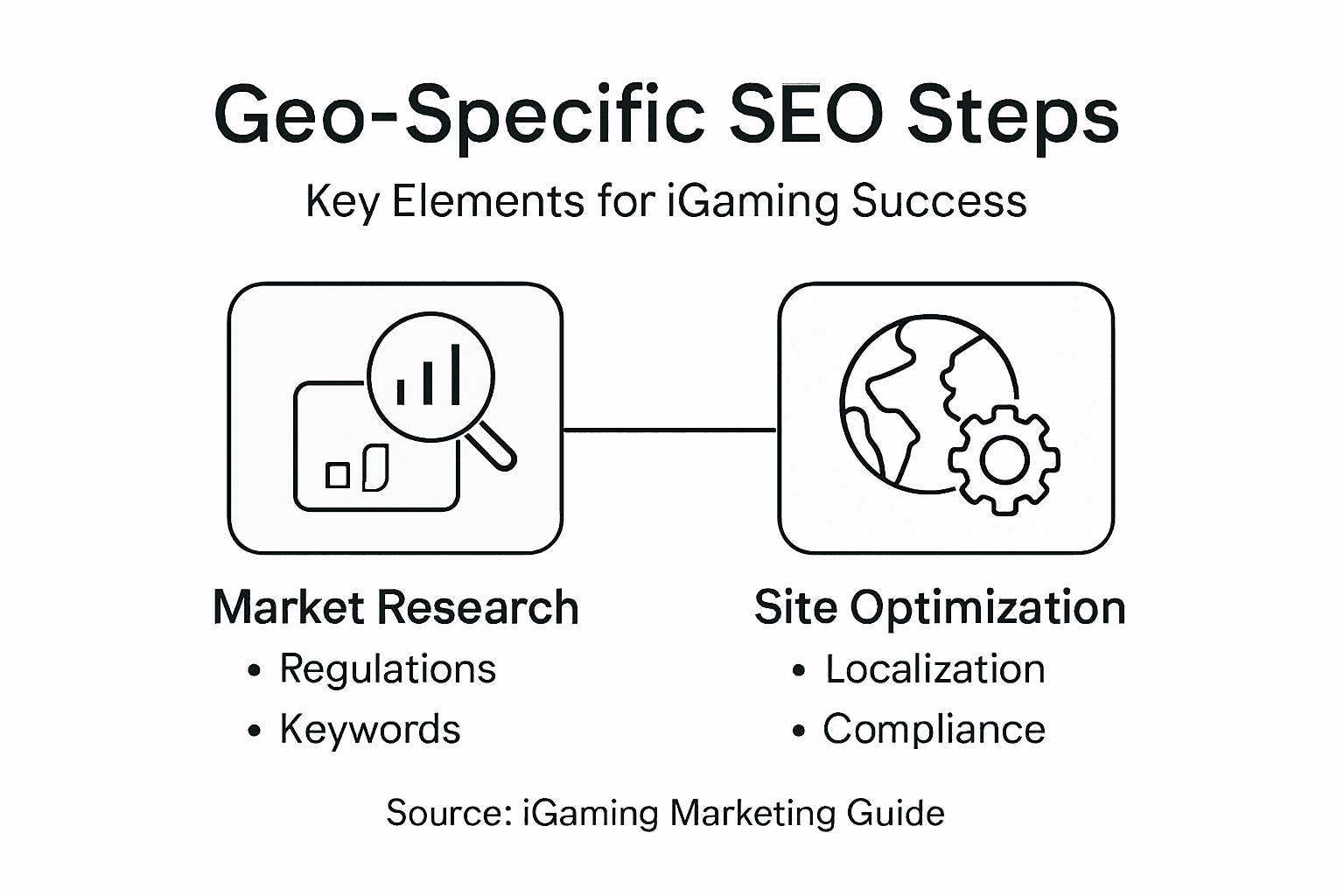
Remember that keyword mapping is not a one-time task but an ongoing process of refinement. Continuously monitor search trends, player behavior, and regulatory changes in each market to maintain the accuracy and effectiveness of your geo-specific keyword strategy.
Pro tip: Create a quarterly keyword audit process that reviews performance metrics and adjusts your geo targeting approach based on real-time search data and market shifts.
Step 3: Customize Site Structure for Jurisdictional Compliance
Navigating the complex regulatory landscape of iGaming requires a strategic approach to website architecture that goes beyond traditional SEO practices. In this step, you will learn how to design a site structure that meets jurisdictional compliance requirements while maintaining optimal search engine performance.
Begin by creating a clear geographic segmentation strategy using subdirectories or subdomains for each licensed market. This approach allows you to develop targeted content strategies that align with specific regional regulations. For instance, your United Kingdom section should include distinct licensing information, responsible gaming disclosures, and region specific content that demonstrates compliance with local gambling authorities.
Implement technical elements that support jurisdictional differentiation. Use hreflang tags to signal geographic targeting to search engines, and develop IP based content delivery mechanisms that automatically present users with region appropriate content. Your site architecture must prominently display licensing details, age verification requirements, and region specific player protection information. This approach not only ensures regulatory compliance but also builds user trust by demonstrating transparency and commitment to responsible gaming practices.

Remember that site structure is a dynamic element requiring continuous refinement. Stay informed about changing regulations in each market and be prepared to quickly adapt your website architecture to maintain compliance and search engine visibility.
Pro tip: Create a compliance monitoring system that automatically flags potential structural changes needed when regulatory requirements shift in your target markets.
Step 4: Optimize On-Page Content for Local Signals
Successful iGaming SEO demands a nuanced approach to creating locally targeted content that goes far beyond simple translation. You will learn how to craft on-page elements that signal geographic relevance and build trust with players in specific regional markets.
Begin by developing content that authentically reflects local culture and gambling preferences. This means incorporating region specific references such as local sports teams, cultural events, and payment methods that resonate with players in each jurisdiction. Your local SEO strategy should include carefully crafted meta titles and descriptions that include geographic keywords unique to each market. For example, a United Kingdom page might reference Premier League football betting, while a page targeting the United States would focus on American sports betting terminology.
Implement technical on-page optimization techniques that reinforce geographic targeting. Use URL structures with country specific subdirectories, include local currency references, and showcase region appropriate gambling licenses. Your content should demonstrate deep understanding of local market nuances through strategic keyword placement, culturally relevant examples, and language that feels native to each target region. This approach not only improves search engine rankings but also builds credibility with local players who expect a tailored gambling experience.
Remember that local signal optimization is an ongoing process. Continuously monitor changes in regional search behaviors, cultural trends, and player preferences to keep your on-page content dynamic and relevant.
Pro tip: Develop a local content audit system that quarterly reviews and updates your geo targeted content to ensure maximum relevance and search engine performance.
Step 5: Build Authority with Regionally Relevant Links
Successful link-building in iGaming demands a sophisticated approach that goes beyond simple backlink acquisition. You will learn how to develop a strategic link profile that enhances your geographic credibility and search engine performance across different regulatory markets.
Focus on acquiring links from authoritative regional sources that demonstrate genuine relevance to your target markets. This means seeking out partnerships with local sports media, regional gambling publications, and respected industry websites specific to each jurisdiction. Understanding anchor text strategies becomes crucial in this process, as links should reflect the nuanced language and search behaviors of each geographic region. For instance, a link from a United Kingdom sports betting forum will carry far more weight than a generic international directory listing.
Develop a targeted link acquisition strategy that prioritizes quality and geographic specificity. Engage in digital PR initiatives, collaborate with local content creators, and participate in region specific industry events to build natural, high value backlinks. Your link profile should tell a coherent story about your brand’s expertise and credibility within each specific market. Pay special attention to the contextual relevance of each link, ensuring that the surrounding content aligns with local player expectations and regulatory standards.
Remember that link building is an ongoing process that requires continuous refinement and strategic thinking. Regularly audit your link profile to ensure it remains diverse, authoritative, and aligned with the unique characteristics of each target market.
Pro tip: Create a geographic link diversity matrix that tracks link sources by region, ensuring you maintain a balanced and natural backlink profile across different jurisdictions.
Step 6: Validate SEO Effectiveness with Geo-Targeted KPIs
Successful iGaming SEO demands a sophisticated approach to measuring performance that goes beyond traditional analytics. You will learn how to develop a comprehensive Key Performance Indicator framework that provides granular insights into your search strategy’s effectiveness across different geographic markets.
Construct a multi-layered KPI dashboard that tracks region specific metrics critical to iGaming success. Analyzing international SEO performance requires looking beyond basic organic traffic numbers. Focus on metrics that reflect player acquisition and regulatory compliance such as first-time depositor conversion rates, jurisdiction specific organic search visibility, and engagement indicators unique to each market. For instance, a United Kingdom focused dashboard might emphasize responsible gaming signal tracking, while a Latin American market view would prioritize mobile search performance and regional payment method conversions.
Develop a dynamic measurement approach that adapts to emerging search technologies and market shifts. As generative AI transforms search landscapes, your KPI framework must evolve to capture nuanced performance indicators. This means tracking not just traditional ranking metrics, but also brand presence in AI generated search results, citation frequency in regional queries, and engagement levels from localized AI interactions. Your goal is creating a comprehensive performance measurement system that provides actionable insights across diverse regulatory environments.
Remember that geo targeted KPI validation is an ongoing process requiring continuous refinement and strategic thinking. Regularly reassess your measurement approach to ensure it remains aligned with market dynamics and technological innovations.
Pro tip: Implement a quarterly geo targeted SEO performance review that cross references KPI data with regulatory changes to maintain a proactive and adaptive search strategy.
Here’s a summary comparing key iGaming SEO tactics and their primary business benefits:
| Step Focus | Main Tactic | Primary Business Benefit |
|---|---|---|
| Regulatory & Market Analysis | Regulatory tracking system | Minimized compliance risk |
| Geo-Specific Keyword Mapping | Keyword matrix & trend audits | Increased search relevance |
| Jurisdictional Site Structure | Geographic subdirectories | Stronger regional SERP visibility |
| On-Page Local Content Optimization | Culturally tailored content | Higher player engagement |
| Regional Link Building | Authority links from local sources | Improved regional trust signals |
| Geo-Targeted KPI Validation | Custom dashboards per jurisdiction | Actionable market-specific insights |
Master Geo-Specific iGaming SEO With Proven Expert Strategies
The complexities of navigating strict regulations and diverse player intent across global markets can feel overwhelming for iGaming marketers and operators. This article highlights key challenges like developing geo-specific keyword strategies, maintaining jurisdictional site compliance, and building regionally trusted authority—all essential to winning in competitive SERPs. If you are seeking to safely optimize for high-value keywords while staying compliant with age verification and licensing requirements you are not alone.
Our iGaming SEO coaching program is designed specifically to address these exact challenges. You will learn how to implement tailored SEO frameworks that integrate regulatory tracking, localized content optimization, and region-specific link building. Through guided expert coaching you will gain clarity on how to align your SEO strategy with legal mandates and player behavior across markets like the United Kingdom, Sweden, Latin America, and Asia Pacific. It is the smart way to maximize visibility and player acquisition without risking compliance.
Ready to gain a competitive edge in the complex iGaming landscape? Discover how to outrank rivals and scale traffic safely with our proven iGaming SEO solutions. Don’t wait for regulatory shifts to put your rankings at risk. Take control today and master the art of geo-specific search optimization by visiting 1on1seo.com.
Frequently Asked Questions
What are the key compliance factors to consider for iGaming SEO?
Understanding compliance factors is crucial for iGaming SEO success. Focus on mapping regulatory frameworks, such as age verification and content restrictions, for each target market. Create a comprehensive spreadsheet to track these regulations and update it regularly to stay compliant.
How do I identify geo-specific keywords for my iGaming site?
To find geo-specific keywords, conduct thorough market research for each target jurisdiction. Use specialized keyword research tools to identify long-tail keywords reflecting local search behaviors, adjusting your keyword strategy quarterly to align with emerging trends.
What is the best way to structure my iGaming website for different jurisdictions?
Create a clear site structure using subdirectories or subdomains for each licensed market. Ensure that your site architecture includes distinct content, licensing information, and age verification details tailored to each region, facilitating compliance and improving visibility in search results.
How can I create relevant local content for my iGaming users?
Develop content that resonates with the local culture and gambling preferences by incorporating region-specific references. Tailor your meta titles and descriptions to include geographic keywords, and conduct quarterly audits to keep your content fresh and aligned with local user expectations.
What strategies should I use for link building in the iGaming industry?
Focus on acquiring high-quality links from authoritative regional sources relevant to your target markets. Engage in digital PR efforts and collaborate with local content creators to build a diverse and credible backlink profile that enhances your site’s credibility and search rankings.
How do I measure the effectiveness of my geo-targeted SEO efforts?
Develop a multi-layered KPI dashboard to track metrics critical to iGaming success, such as conversion rates and search visibility. Review your performance metrics quarterly to ensure your strategies remain effective and adaptive to market changes.
Recommended
- Cross-Market SEO Strategy: Gaining iGaming Edge Globally
- 7 Steps to a Winning iGaming On-Page SEO Checklist
- Technical SEO for iGaming: Scaling and Crawl Success
- SERP Feature Domination: iGaming SEO’s Competitive Edge
- Complete Guide to International SEO Strategies - Jarrod Harman
- Google Ad Performance: Maximising Mobile Game ROI - playablemaker.com Google Ad Performance: Maximising Mobile Game ROI
- Why Local SEO Optimization Is a Game Changer for You - LSA SEO Agency