

Most american companies expanding into Europe find themselves navigating some of the world’s strictest data privacy rules. With over 90 percent of small and mid-sized firms reporting challenges meeting GDPR requirements, the push for EU digital simplification has never been more relevant. As new Digital Omnibus proposals reshape consent, AI data handling, and user rights, understanding these changes is crucial for anyone operating in digital spaces or managing cross-border customer data.
Table of Contents
- EU Digital Omnibus and GDPR Simplification
- Changes to AI Training Data Regulation
- Redefined Cookie Consent and Anonymization
- Compliance Challenges for iGaming Marketers
- Risks, User Rights, and Industry Concerns
Key Takeaways
| Point | Details |
|---|---|
| Digital Omnibus Proposal | The EU’s Digital Omnibus aims to reduce compliance burdens, particularly for small and mid-sized companies, while maintaining robust data protection standards. |
| AI Training Data Regulation | Changes in AI regulations broaden the use of pseudonymized data and introduce flexible legal grounds for processing, enhancing opportunities for technology companies. |
| Cookie Consent Innovations | New browser-level consent mechanisms will simplify user privacy management, helping reduce consent fatigue and administrative complexities for businesses. |
| iGaming Marketing Compliance | iGaming marketers face challenges with evolving consent mechanisms and data handling regulations, requiring more proactive compliance strategies. |
EU Digital Omnibus and GDPR Simplification
The European Union is taking significant steps to streamline data protection regulations through its Digital Omnibus proposal, a strategic initiative designed to reduce administrative complexities while maintaining robust privacy standards. This legislative effort focuses on simplifying General Data Protection Regulation (GDPR) requirements, particularly for small and mid-sized companies struggling with complex compliance frameworks.
The core objective of the Digital Omnibus is to ease administrative burdens on businesses while preserving fundamental data protection principles. According to the European Parliament’s LIBE Committee, the proposal specifically targets extending record-keeping exemptions for Small and Mid-Cap (SMC) companies. These modifications aim to ensure compliance remains achievable under the accountability principle and a pragmatic risk-based approach, recognizing that smaller organizations often face disproportionate regulatory challenges.
Key features of the proposed Digital Omnibus include:
- Simplified consent mechanisms for low-risk data processing activities
- Extended exemptions for SMEs in record-keeping requirements
- More flexible interpretation of personal data definitions
- Browser-level consent management to reduce “banner fatigue”
- Clearer guidelines for anonymizing datasets
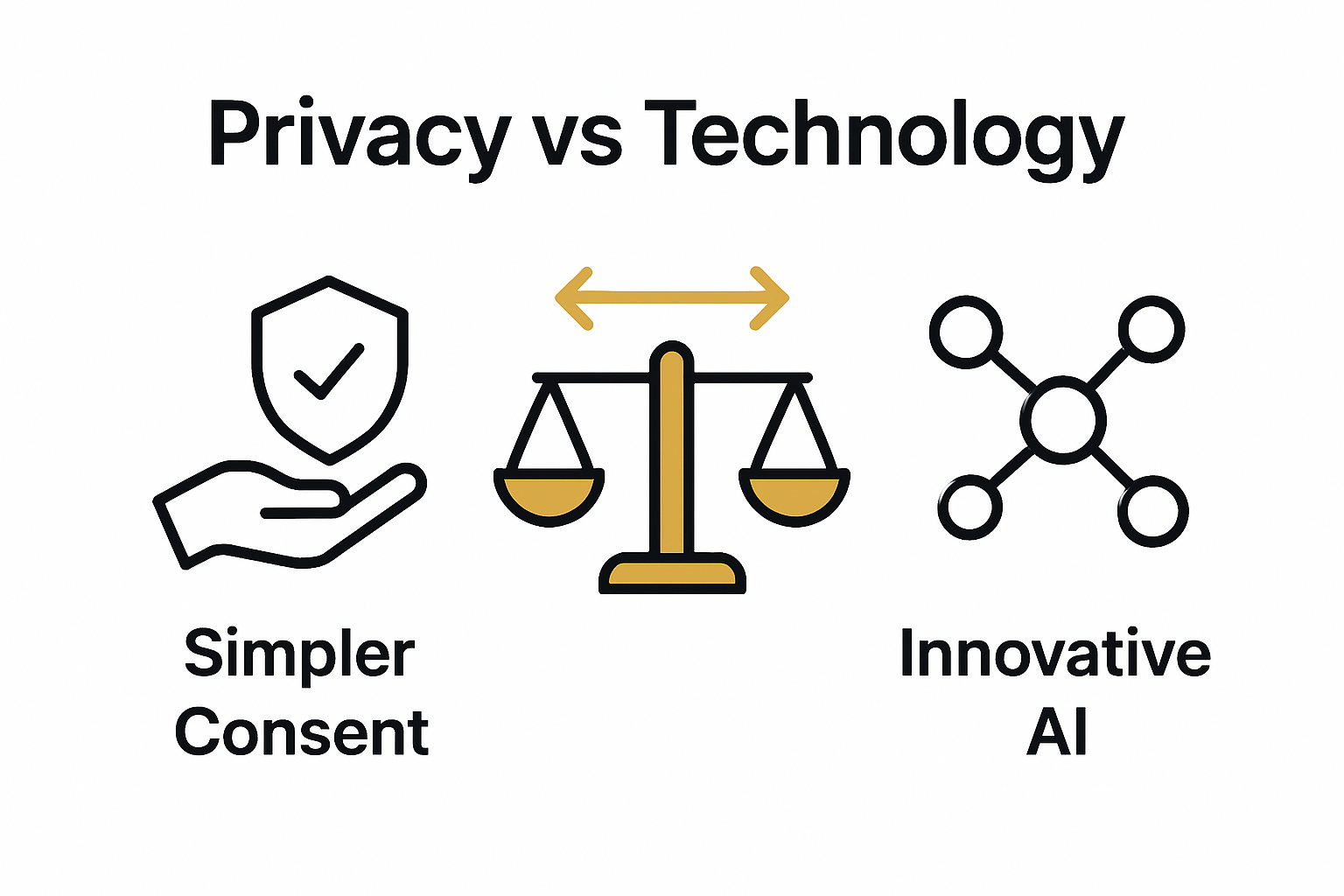
From a practical perspective, these changes represent a nuanced balancing act. While maintaining strong privacy protections, the EU is acknowledging the need to support technological innovation and reduce unnecessary bureaucratic friction. Businesses operating in digital spaces will need to carefully monitor these evolving regulations, understanding how the proposed changes might impact their data handling and consent management strategies.
Changes to AI Training Data Regulation
The European Commission is introducing groundbreaking changes to AI training data regulations, signaling a significant shift in how personal data can be utilized for artificial intelligence development. By delaying the implementation of high-risk AI provisions until December 2027, the regulatory body is creating a more flexible environment for technology companies to leverage user data while maintaining core privacy protections.
Pseudonymized data is now at the center of this transformative approach. The proposed changes redefine how personal information can be processed, effectively expanding the legal basis for AI training beyond traditional consent mechanisms. Major technology companies like Google, Meta, and OpenAI will now have broader opportunities to utilize European users’ data under a legitimate interest framework, which represents a substantial departure from previous restrictive interpretations of data protection regulations.
Key modifications in the proposed AI training data regulation include:
- Extending implementation deadlines for high-risk AI systems
- Broadening the definition of pseudonymized data
- Allowing AI training under expanded “legitimate interest” legal grounds
- Reducing bureaucratic barriers for technology innovation
- Creating more flexible data processing permissions
This regulatory evolution reflects a strategic balancing act between protecting individual privacy and fostering technological innovation. By providing clearer guidelines and more flexible frameworks, the European Commission aims to position European tech companies more competitively in the global AI landscape. Companies will need to carefully navigate these new regulations, understanding the nuanced changes that offer both opportunities and potential compliance challenges.
Redefined Cookie Consent and Anonymization
The European Commission is revolutionizing digital privacy regulations through its Digital Omnibus package, introducing groundbreaking changes to cookie consent mechanisms that promise to simplify user experiences and reduce administrative burdens for businesses. These proposed modifications aim to address the growing problem of consent fatigue, where users are overwhelmed by constant cookie permission requests across websites and digital platforms.

Under the new legislative framework, browser-level consent will become a primary method for managing user preferences. The Digital Omnibus proposes a streamlined approach that allows users to set their privacy settings at the browser level, which will then be automatically respected by websites. This one-click solution offers a six-month validity period, significantly reducing the frequency of consent prompts and creating a more user-friendly digital environment. Companies will be required to respect these browser-level settings, marking a substantial shift from the current fragmented consent landscape.
Key features of the proposed cookie consent and anonymization changes include:
- One-click consent valid for six months
- Browser-level privacy setting controls
- Exceptions for statistical and security-related tracking
- Simplified consent mechanisms for low-risk data collection
- Enhanced user control over personal data tracking
The regulatory approach represents a nuanced balance between protecting user privacy and enabling digital innovation. By reducing administrative complexities and providing clearer guidelines, the European Commission aims to create a more transparent and user-centric digital ecosystem. Companies will need to adapt their data collection strategies, focusing on building trust through more intuitive and respectful approaches to user consent and data management.
Compliance Challenges for iGaming Marketers
The European Union’s Digital Omnibus package introduces unprecedented regulatory complexities for iGaming marketers, demanding a sophisticated approach to navigating evolving data protection and digital marketing landscapes. The Omnibus IV legislative package aims to digitalize existing requirements, creating a challenging environment where traditional compliance strategies may no longer suffice. Regulatory SEO strategies will become increasingly critical for marketers seeking to maintain competitive positioning.
Specifically, the proposed changes target administrative processes and data handling mechanisms that directly impact iGaming marketing operations. The LIBE Committee’s discussions have highlighted significant concerns about overlapping rules and legal uncertainties, which could potentially expose marketing teams to increased compliance risks. Marketers will need to develop more nuanced approaches to user consent, data collection, and targeted advertising that align with the EU’s increasingly complex regulatory framework.
Key compliance challenges for iGaming marketers include:
- Adapting to browser-level consent mechanisms
- Redefining personal data usage for marketing purposes
- Implementing more transparent data anonymization techniques
- Navigating expanded definitions of legitimate interest
- Managing cross-platform data tracking restrictions
The evolving regulatory landscape demands a proactive approach. iGaming marketers must invest in robust compliance frameworks that anticipate regulatory changes rather than merely reacting to them. This will require ongoing education, technological adaptability, and a deep understanding of the nuanced intersections between marketing effectiveness and user privacy protections. Success will depend on the ability to balance innovative marketing strategies with increasingly stringent data protection requirements.
Risks, User Rights, and Industry Concerns
The European Commission’s Digital Omnibus package has ignited a complex debate surrounding the delicate balance between technological innovation and fundamental user privacy rights. Privacy advocates are raising significant concerns about the proposed regulations, arguing that the new framework potentially provides excessive latitude to big tech companies while simultaneously undermining core digital rights protections. Search engine trust mechanisms will become increasingly critical in maintaining transparency and user confidence.
The proposed revisions introduce nuanced legal interpretations that could fundamentally alter how personal data is processed, collected, and utilized across digital platforms. Civil society groups have warned that the planned changes risk weakening existing digital-rights protections, creating potential vulnerabilities for individual users. The expanded definitions of legitimate interest and pseudonymized data could create significant gray areas where user consent becomes more complex and less transparent.
Key risks and concerns identified in the proposed regulations include:
- Potential erosion of explicit user consent requirements
- Increased data processing capabilities for technology companies
- Reduced transparency in personal data utilization
- Expanded definitions of anonymized and pseudonymized data
- Potential misalignment between user expectations and regulatory frameworks
The ongoing tension between technological innovation and user protection demands a sophisticated approach. Industries must develop robust mechanisms that prioritize user rights while enabling technological advancement. Successful navigation of these complex regulatory landscapes will require continuous adaptation, proactive compliance strategies, and a genuine commitment to maintaining user trust in an increasingly data-driven digital ecosystem.
Navigate New EU GDPR Rules and AI Data Challenges with Precision
The EU’s plan to simplify GDPR and reshape AI training data regulations presents complex challenges especially for iGaming marketers who must balance strict user consent requirements with innovative data use. Managing browser-level consent preferences, redefining legitimate interest, and addressing consent fatigue are critical issues impacting your digital marketing strategies today. These regulatory shifts demand deeper understanding and agile SEO approaches tailored to compliance and competitive edge.
Master these complexities with expert guidance from our iGaming SEO coaching program. We specialize in helping affiliates, operators, and marketers optimize for high-risk, geo-specific keywords while using AI responsibly without triggering compliance flags. Act now to transform your SEO approach in line with evolving EU regulations and gain an unbeatable advantage in regulated gambling markets. Get started today by visiting https://1on1seo.com/ to learn how our frameworks can secure your rankings and ensure compliance.
Frequently Asked Questions
What is the purpose of the EU Digital Omnibus proposal?
The EU Digital Omnibus proposal aims to simplify data protection regulations, particularly the GDPR, to reduce administrative burdens on small and mid-sized businesses while preserving strong privacy standards.
How will user consent mechanisms change under the new regulations?
The proposed regulations will introduce simplified consent mechanisms for low-risk data processing and implement browser-level consent management to reduce user consent fatigue, allowing for easier management of privacy settings.
What impacts will the changes to AI training data regulations have on technology companies?
The changes will expand the legal basis for using pseudonymized data in AI training under the ‘legitimate interest’ framework, offering more flexibility in how technology companies can utilize user data while maintaining essential privacy protections.
What compliance challenges might marketers face with the new Digital Omnibus regulations?
Marketers may encounter difficulties adapting to new consent mechanisms, reinterpreting personal data usage, implementing transparent data anonymization techniques, and navigating expanded definitions related to legitimate interest in their target advertising strategies.
Recommended
- How AI and Reviews Shape Modern Trust & Search Visibility - 1on1 SEO
- How to Grow AI Engine Engagement: A Step-by-Step Framework for AEO and SEO Success - 1on1 SEO
- Blog Archives - 1on1 SEO
- Blog - 1on1 SEO
- GDPR Compliance, Data Handling and Data Protection | Computer Forensics Lab | Digital Forensics Services | Digital Detectives
- Compliance GDPR e ISO 27018: Guida Completa - Security Hub