

Most American iGaming operators are surprised to learn that over 80 percent of Google’s recent algorithm updates now prioritize semantic search and entity-based relationships over traditional keywords. This shift changes the game for anyone trying to stand out online, especially in such a competitive industry. Understanding entity-based SEO is a must for American platforms looking to increase visibility, earn trust from search engines, and build lasting authority in digital gaming.
Table of Contents
- Entity-Based SEO Defined For iGaming
- Entity Clustering And Semantic Authority Building
- Structured Data And Schema For Clarity
- Aligning Brand Entities With Knowledge Graph
- Internal Linking And Semantic Relevance In Practice
- Identifying Gaps Using AI And NLP Tools
Key Takeaways
| Point | Details |
|---|---|
| Entity-Based SEO | Focus on semantic relationships rather than just keywords to enhance search visibility and authority in the iGaming industry. |
| Content Clustering | Develop interconnected content around core topics to signal expertise and improve search rankings. |
| Structured Data Use | Implement precise schema markup to relay critical information about services and enhance discoverability. |
| AI and NLP Tools | Utilize advanced tools for identifying content gaps and optimizing information architecture to meet user needs. |
Entity-Based SEO Defined for iGaming
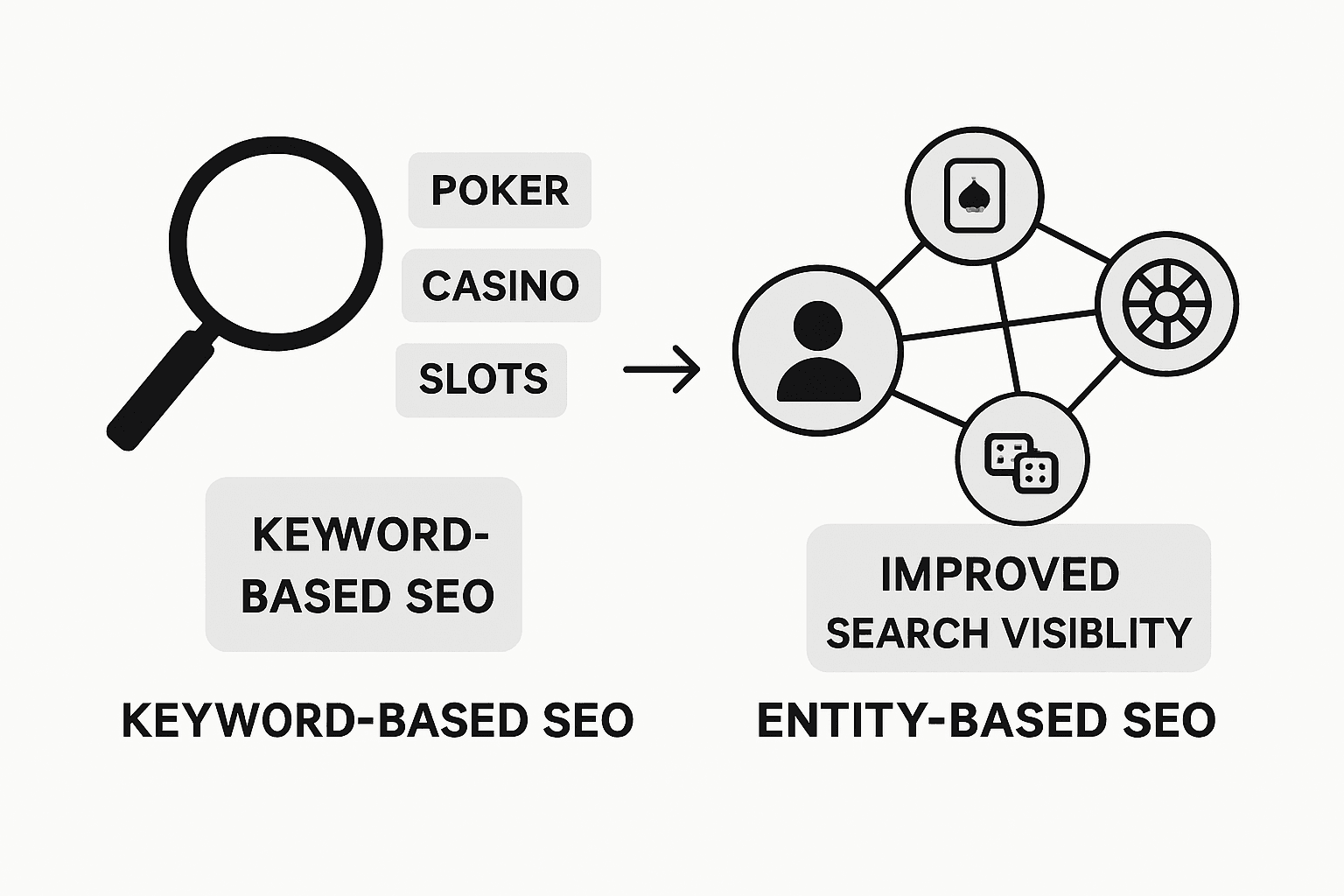
Entity-based SEO represents a sophisticated search engine optimization approach that moves beyond traditional keyword targeting, focusing instead on understanding and mapping comprehensive semantic relationships within digital content. In the competitive iGaming industry, this strategy transforms how platforms communicate their topical authority to search algorithms.
Semantic mapping requires identifying core entities like game types, regulatory frameworks, player experiences, and technical infrastructures. Search engines now analyze these interconnected concepts, rewarding content that demonstrates deep, contextual understanding rather than superficial keyword matching. For iGaming platforms, this means creating rich, interrelated content ecosystems that comprehensively explore gambling-related topics.
The technical backbone of entity-based SEO involves structured data markup, knowledge graph optimization, and strategic content clustering. Platforms must develop content that explicitly defines relationships between gambling concepts - connecting terms like “sports betting”, “regulatory compliance”, “player protection”, and “game mechanics” through intelligent internal linking and comprehensive topical coverage. This approach signals expertise and builds credibility with both search algorithms and potential players.
Here’s a comparison of how traditional keyword-based SEO and entity-based SEO differ in the iGaming industry:
| Aspect | Keyword-Based SEO | Entity-Based SEO |
|---|---|---|
| Focus | Individual keywords | Conceptual relationships |
| Content Structure | Standalone pages | Interconnected ecosystems |
| Technical Elements | Basic metadata | Structured data & schema |
| Search Engine Understanding | Surface-level matching | Deep contextual analysis |
Pro Tip: Entity Mapping Strategy: Create a detailed content matrix that maps all potential semantic relationships within your iGaming platform’s domain, ensuring each piece of content connects logically and comprehensively with related topics and concepts.
Entity Clustering and Semantic Authority Building
Entity clustering transforms SEO from a keyword-driven approach to a holistic semantic strategy that systematically organizes content around interconnected topics. In the iGaming search landscape, this means creating comprehensive content networks that demonstrate deep expertise across multiple related gambling domains.
Content clustering involves strategically mapping related topics and creating hierarchical content structures that signal comprehensive understanding to search algorithms. For iGaming platforms, this could mean developing interconnected content around themes like:
- Sports betting regulations
- Player protection mechanisms
- Game mechanics and fairness
- Responsible gambling frameworks
- Technical infrastructure and security
Successful semantic authority building requires more than simple topic grouping. Advanced platforms develop intricate content relationships that showcase nuanced understanding through intelligent internal linking, structured data markup, and comprehensive topic exploration. Search engines increasingly reward content ecosystems that demonstrate depth, context, and meaningful connections between complex gambling-related concepts.
Research indicates that semantic clustering dramatically improves search visibility by helping algorithms understand the contextual landscape of a platform’s expertise. By developing content that systematically explores interconnected gambling domains, iGaming platforms can establish themselves as authoritative sources of information and improve their overall search performance.
Pro Tip: Content Network Design: Develop a strategic content map that identifies 5-7 core topic clusters, then create interlinked content pieces that comprehensively explore each cluster’s subtopics and relationships.
Below is a summary of core technical strategies that boost semantic authority for iGaming platforms:
| Strategy | Main Purpose | Business Benefit |
|---|---|---|
| Content Clustering | Organize topics hierarchically | Increases topical authority |
| Structured Data | Define entities for search engines | Enhances discoverability |
| Knowledge Graph Alignment | Build robust digital identity | Improves brand visibility |
| Semantic Internal Linking | Connect related content | Signals expertise and trust |
Structured Data and Schema for Clarity
Structured data represents a critical technical approach that transforms how search engines interpret and understand digital content, particularly within the complex regulatory landscape of iGaming. By implementing precise schema markup, iGaming platforms can communicate intricate details about their services, game mechanics, and compliance frameworks directly to search algorithms.
Schema markup enables platforms to define specific entities with unprecedented precision. For iGaming websites, this means creating rich, machine-readable descriptions that encompass:
- Game types and variations
- Betting limits and rules
- Licensing and regulatory information
- Player protection mechanisms
- Responsible gambling features
The technical implementation of structured data goes beyond simple metadata. Advanced iGaming platforms use sophisticated semantic annotations that create a comprehensive digital fingerprint of their services. These annotations help search engines understand nuanced relationships between gambling concepts, player experiences, and regulatory requirements. By providing clear, unambiguous information through schema markup, platforms can significantly enhance their visibility and credibility in search results.

Research demonstrates that well-implemented structured data can dramatically improve search engine understanding and potentially increase click-through rates. For iGaming platforms navigating complex regulatory environments, this means the ability to communicate critical information quickly and accurately, building trust with both search algorithms and potential players.
Pro Tip: Schema Implementation Strategy: Systematically audit your website’s key pages, identifying opportunities to implement the most relevant schema types, prioritizing those that clearly communicate your platform’s unique value and compliance credentials.
Aligning Brand Entities With Knowledge Graph
Building a robust presence in Google’s Knowledge Graph requires strategic, multi-dimensional approach to digital brand representation, especially within the complex iGaming regulatory environment. This process involves creating a comprehensive, consistent digital footprint that clearly defines a platform’s unique identity, expertise, and authoritative standing across multiple online channels.
Knowledge Graph alignment demands meticulous synchronization across various digital touchpoints. For iGaming platforms, this means developing a holistic entity profile that encompasses:
- Consistent business information across platforms
- Verified legal and regulatory credentials
- Authoritative content demonstrating industry expertise
- Clear representation of technical and operational capabilities
- Transparent player protection and responsible gaming commitments
Successful Knowledge Graph integration goes beyond simple information listing. Advanced iGaming platforms create semantic entity networks that demonstrate complex relationships between their brand, regulatory frameworks, player experiences, and industry innovations. By strategically connecting these entity relationships, platforms can signal deep contextual understanding to search algorithms, establishing themselves as definitive sources of information in their specific gambling domain.
The technical execution involves precise data management, ensuring that every digital reference reinforces the platform’s core identity. This means maintaining exact consistency in business names, contact information, licensing details, and brand descriptions across websites, social media profiles, industry directories, and regulatory databases. Such meticulous approach transforms fragmented digital presence into a unified, authoritative entity that search engines can confidently recognize and rank.
Pro Tip: Entity Consistency Protocol: Develop a comprehensive brand style guide that mandates exact formatting for all digital references, ensuring pixel-perfect consistency across every online platform and information source.
Internal Linking and Semantic Relevance in Practice
Internal linking transcends simple navigation, emerging as a sophisticated strategy for communicating semantic relationships between content pieces. In the competitive landscape of anchor text optimization, iGaming platforms must strategically construct interconnected content networks that signal comprehensive topical expertise to search algorithms.
Semantic linking requires deep understanding of contextual relationships between content pieces. For iGaming websites, this means developing intricate linking strategies that demonstrate nuanced connections across complex domains:
- Regulatory compliance content
- Player protection resources
- Game mechanics explanations
- Responsible gambling guidelines
- Technical infrastructure insights
Advanced semantic internal linking goes beyond simple keyword matching. Sophisticated platforms create contextual content webs that strategically link related pieces, using precise anchor text that communicates subtle topical relationships. This approach helps search engines understand the depth and breadth of a platform’s expertise, transforming isolated content pieces into comprehensive knowledge ecosystems that reinforce topical authority.
The technical execution demands meticulous content mapping and strategic link placement. Each internal link must serve multiple purposes: guiding user navigation, distributing page authority, and reinforcing semantic relationships between different content clusters. By treating internal links as semantic connectors rather than mere navigation tools, iGaming platforms can create rich, interconnected content landscapes that demonstrate comprehensive industry understanding.
Pro Tip: Content Mapping Strategy: Develop a visual content relationship matrix that identifies semantic connections between your platform’s content pieces, ensuring each internal link serves both user experience and search engine comprehension goals.
Identifying Gaps Using AI and NLP Tools
Artificial intelligence and natural language processing have revolutionized content strategy, transforming how iGaming platforms identify and address semantic knowledge gaps. In the complex landscape of AI-driven content optimization, advanced machine learning techniques provide unprecedented insights into content comprehensiveness and topical coverage.
Semantic gap analysis requires sophisticated computational approaches that go beyond traditional keyword research. For iGaming platforms, this means leveraging AI tools to uncover nuanced content opportunities across multiple domains:
- Regulatory compliance exploration
- Player protection strategy insights
- Technical infrastructure explanations
- Responsible gambling education
- Emerging industry trend analysis
Advanced natural language processing enables contextual content mapping that reveals subtle interconnections and unexplored topic territories. These AI-driven techniques analyze existing content ecosystems, identifying precise areas where platforms can expand their semantic footprint, develop more comprehensive topic clusters, and demonstrate deeper industry expertise. By systematically mapping content relationships, iGaming platforms can create more intelligent, contextually rich information landscapes.
The technical implementation involves using machine learning algorithms that can analyze vast amounts of content, identifying semantic patterns, relationship networks, and potential knowledge gaps. This approach transforms content strategy from a reactive to a predictive model, allowing platforms to proactively develop content that comprehensively addresses user information needs and search engine comprehension requirements.
Pro Tip: Semantic Mapping Protocol: Implement quarterly AI-powered content audits that systematically analyze your existing content ecosystem, identifying emerging topical opportunities and semantic relationship potential.
Boost Your iGaming SEO with Entity-Based Strategies
The article highlights the critical challenge of mastering entity-based SEO to outrank competitors in the highly regulated and semantic-driven iGaming landscape. Key pain points include navigating complex content clustering, structured data implementation, and aligning your brand with the Google Knowledge Graph—all essential for building topical authority and trust. If you want to move beyond simple keyword matching and truly connect your platform’s content through semantic internal linking and AI-driven gap analysis, you need specialized guidance tailored to iGaming.
Our iGaming SEO coaching program is designed precisely for marketers, affiliates, and operators facing these challenges. You will learn how to safely optimize for high-risk keywords, implement geo-specific strategies, and build semantic content ecosystems that command authority in search results. Don’t let regulatory complexity or technical SEO gaps hold you back. Visit 1on1seo.com to explore how our expert coaching can transform your SEO approach with proven frameworks.
Ready to master semantic SEO and dominate iGaming SERPs? Start now with our coaching program and gain the tools to build a trusted, authoritative presence that search engines and players recognize. Take the next step and secure your competitive advantage today.
Frequently Asked Questions
What is entity-based SEO in the iGaming industry?
Entity-based SEO focuses on understanding and mapping semantic relationships between concepts in digital content, moving beyond traditional keyword targeting to demonstrate topical authority, especially in the competitive iGaming industry.
How does entity clustering benefit iGaming platforms?
Entity clustering organizes content around interconnected topics, which improves search visibility and establishes authority by showcasing expertise across multiple related gambling domains.
What role does structured data play in entity-based SEO?
Structured data, through schema markup, helps iGaming platforms communicate detailed information about their offerings, such as game types and regulatory compliance, making it easier for search engines to interpret and rank their content accurately.
How can AI and NLP tools assist in optimizing content for iGaming?
AI and NLP tools can identify semantic gaps and suggest nuanced content opportunities, enabling iGaming platforms to comprehensively address user needs and improve their content strategy with predictive insights.
Recommended
- 7 Bonus Feature SEO Strategies for iGaming Success
- Essential Guide to WordPress SEO Launch Checklist
- Why iGaming Needs SEO: Complete Guide for 2025
- Search Engine Trust: Complete Guide for iGaming SEO
- Understanding the Future of SEO 2025 - seo analytic
- Content Creation for Local SEO: Boost Local Rankings Fast - $99 Local SEO