

Complex legal rules in iGaming create constant challenges for SEO professionals and affiliate marketers working across European, American, and Asian markets. Every jurisdiction brings different frameworks shaped by laws like GDPR and unique advertising restrictions that can impact your content strategy. By applying a compliance-driven approach, including a dynamic audit matrix and responsible gambling principles, you will lay a foundation for efficient audits, lower legal risks, and support trusted user experiences—making your SEO work truly global and future-proof.
Table of Contents
- Step 1: Establish Compliance-Driven Audit Parameters
- Step 2: Gather and Segment Critical iGaming Content
- Step 3: Evaluate Keyword Targeting and Regulatory Fit
- Step 4: Optimize Authority, Trust, and Conversion Signals
- Step 5: Verify Audit Effectiveness and Regulatory Alignment
Quick Summary
| Main Insight | Explanation |
|---|---|
| 1. Establish Compliance-Driven Parameters | Create clear audit parameters to meet jurisdiction-specific legal requirements and standards in iGaming. |
| 2. Conduct Detailed Content Inventory | Organize your content by various criteria to ensure compliance and identify optimization opportunities effectively. |
| 3. Assess Keyword Compliance | Evaluate your keywords for regulatory fit to avoid potential legal issues while maintaining good SEO performance. |
| 4. Optimize Trust Signals | Enhance content credibility by integrating responsible gaming principles and verifying author credentials effectively. |
| 5. Validate Audit Effectiveness | Implement a dynamic verification process to ensure ongoing compliance and quickly adapt to regulatory changes. |
Step 1: Establish compliance-driven audit parameters
Building a robust SEO content audit for iGaming requires establishing clear compliance-driven parameters that align with complex global regulatory frameworks. Your goal in this step is to create a systematic approach that proactively addresses legal requirements across different jurisdictions while maintaining high-quality content standards.
Start by mapping out the specific regulatory landscapes for each target market. This means diving deep into jurisdiction-specific requirements from organizations like the European Gaming and Betting Association, understanding nuanced advertising restrictions, and identifying key compliance indicators. For instance, if you are targeting European markets, you will need to incorporate GDPR data protection standards, responsible gambling messaging requirements, and geo-specific content restrictions. Create a comprehensive compliance checklist that includes key parameters such as:
- Age verification language
- Responsible gambling disclaimers
- Transparent affiliate disclosure statements
- Geographically appropriate gambling terminology
- Content that avoids targeting vulnerable populations
Your audit parameters should also incorporate responsible gambling principles from organizations like the Responsible Gambling Council. This means developing audit criteria that go beyond basic legal compliance and focus on ethical content creation. Evaluate your existing content against these standards, looking for opportunities to demonstrate social responsibility while maintaining SEO effectiveness.
Pro tip: Create a dynamic compliance matrix that can be quickly updated as regulatory requirements shift across different markets, saving you significant time and reducing potential legal risks.
Step 2: Gather and segment critical iGaming content
In this step, you will systematically catalog and organize your iGaming content inventory to establish a comprehensive foundation for your compliance-driven SEO audit. Your primary objective is to create a detailed content repository that allows for precise segmentation and strategic analysis across different content types, markets, and regulatory requirements.
Begin by conducting a comprehensive content inventory that goes beyond simple spreadsheet tracking. Leverage cross-market SEO strategies to map out your content ecosystem comprehensively. Create a structured database that includes critical metadata for each content asset such as publication date, target jurisdiction, content type, primary keywords, and specific compliance indicators. This approach allows you to rapidly assess content against evolving regulatory landscapes and identify potential compliance risks or optimization opportunities.
Segment your content across multiple dimensions beyond traditional taxonomies. Consider categorizing content by:
- Regulatory jurisdiction
- Player demographic
- Content format (blog post, landing page, guide)
- Gambling vertical (sports betting, casino, poker)
- Compliance risk level
- Performance metrics
This multidimensional segmentation transforms your content audit from a mechanical checklist into a strategic intelligence tool. By understanding the granular characteristics of each content asset, you can make informed decisions about content optimization, retirement, or enhancement while maintaining strict compliance standards.
Pro tip: Develop an automated tagging system that dynamically updates content metadata based on regulatory changes, allowing for real-time compliance tracking without manual intervention.
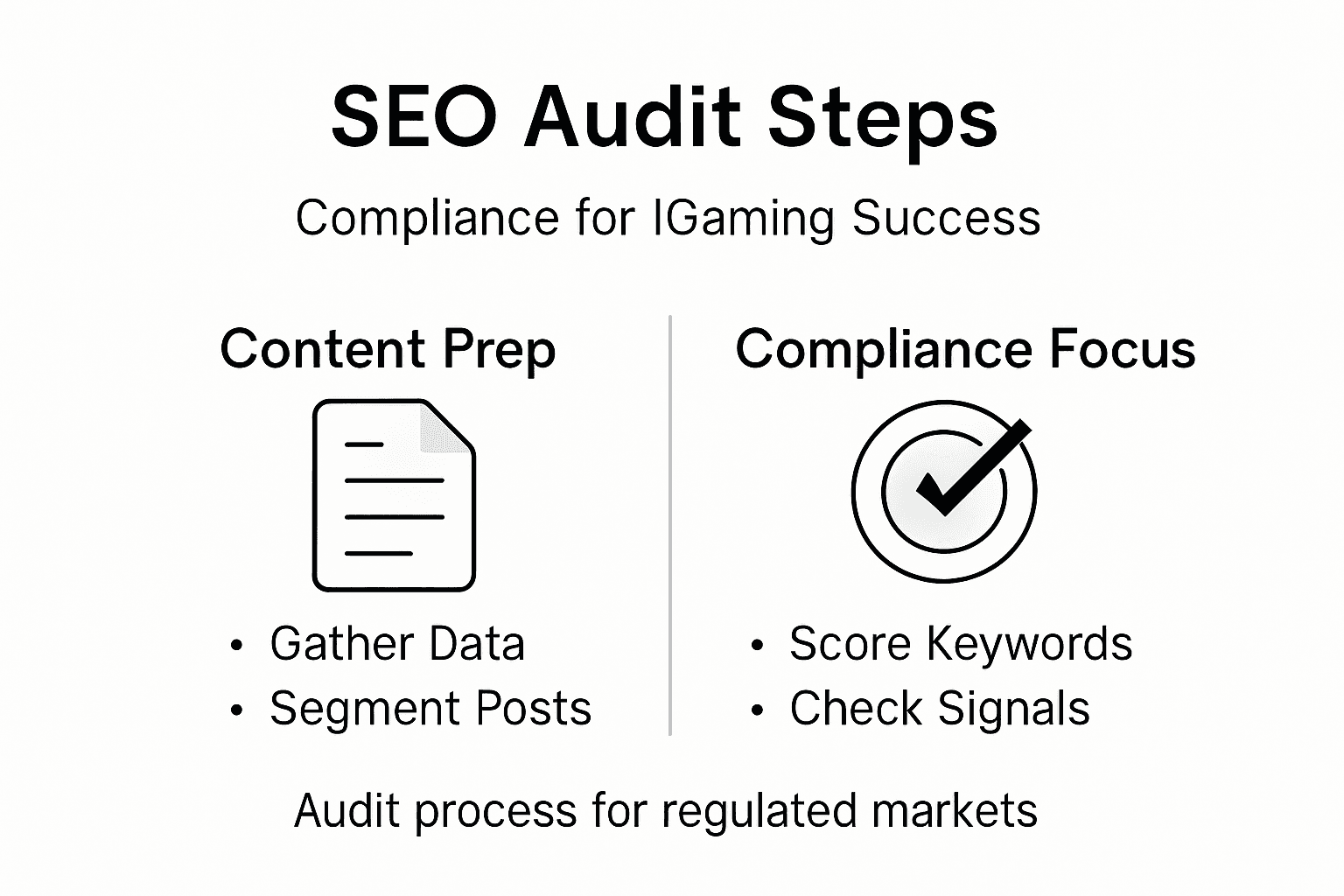
Below is a summary of common content segmentation strategies relevant for iGaming SEO audits:
| Segmentation Dimension | Example Categories | Strategic Benefit |
|---|---|---|
| Jurisdiction | EU, US, Asia | Meets regional rules |
| Content Format | Blog, Guide, Landing Page | Customizes audits by type |
| User Demographic | New players, VIPs | Targets messaging ethically |
| Compliance Risk | Low, Moderate, High | Prioritizes review effort |
Step 3: Evaluate keyword targeting and regulatory fit
In this critical step, you will assess how your existing keyword strategy aligns with complex regulatory requirements across different iGaming markets. Your goal is to identify and mitigate potential compliance risks while maintaining robust SEO performance by carefully examining each keyword through a regulatory lens.
Begin by creating a comprehensive keyword risk matrix that maps each target keyword against specific jurisdictional advertising restrictions. Regulatory SEO guidelines recommend developing a nuanced approach that considers not just the literal meaning of keywords, but their potential interpretative implications in different regulatory contexts. This means evaluating keywords for potential triggers related to:
- Responsible gambling language restrictions
- Age verification implications
- Potential predatory marketing interpretations
- Geographic advertising limitations
- Cultural sensitivity across markets
Your keyword evaluation should extend beyond simple compliance checking. Analyze each keyword through multiple lenses including user intent, search volume, and potential regulatory risk. Create a scoring system that assigns compliance weights to keywords based on their sensitivity and potential for triggering regulatory scrutiny. This approach transforms keyword research from a traditional SEO exercise into a strategic risk management process that protects your content while maintaining search visibility.

Pro tip: Develop a dynamic keyword compliance scoring mechanism that automatically flags high-risk terms and suggests contextually appropriate alternatives in real time.
Step 4: Optimize authority, trust, and conversion signals
In this crucial stage of your iGaming SEO content audit, you will strategically enhance your platform’s credibility and search performance by aligning technical optimization with trust signals that resonate with both users and search algorithms. Your objective is to transform your content from mere information to a trusted resource that demonstrates expertise, reliability, and user-focused value.
Start by implementing advanced E-E-A-T strategies that go beyond traditional SEO approaches. This means developing content that not only meets compliance requirements but actively demonstrates your platform’s commitment to responsible gaming. Create authoritative content layers that include:
- Verified expert author credentials
- Transparent responsible gaming policies
- Comprehensive player protection information
- Clear disclosure of affiliate relationships
- Detailed regulatory compliance documentation
- Independent third party verification badges
Your trust optimization should extend beyond surface level compliance. Develop a sophisticated approach that integrates user experience signals, technical performance metrics, and content quality indicators. This holistic strategy transforms your SEO from a technical exercise into a comprehensive trust-building mechanism that signals credibility to both search algorithms and potential players.
Pro tip: Implement a dynamic content scoring system that automatically assesses and adjusts your content’s trust signals based on evolving regulatory standards and user engagement metrics.
Step 5: Verify audit effectiveness and regulatory alignment
In this critical final stage of your SEO content audit, you will systematically validate the comprehensiveness and precision of your compliance efforts. Your objective is to create a robust verification process that goes beyond surface level checks and provides actionable insights into your regulatory readiness across multiple jurisdictions.
Develop a multi dimensional verification framework that evaluates audit effectiveness through quantitative and qualitative assessments. Off-Page SEO strategies can inform this process by incorporating external validation signals. Your verification protocol should include:
- Cross referencing compliance findings with official regulatory guidelines
- Conducting simulated regulatory compliance scenario testing
- Measuring content alignment against jurisdiction specific requirements
- Tracking potential compliance risk indicators
- Generating comprehensive audit trail documentation
- Establishing continuous monitoring mechanisms
Your verification approach must transcend traditional audit methodologies by creating a dynamic assessment ecosystem. This means developing adaptive verification protocols that can rapidly respond to changing regulatory landscapes while maintaining a proactive stance toward potential compliance challenges. The goal is transforming compliance from a reactive checklist into a strategic competitive advantage that demonstrates your platform’s commitment to responsible and transparent operations.
Pro tip: Implement an automated regulatory intelligence system that continuously updates your verification criteria based on real time legal and industry standard changes.
Here’s how key iGaming content audit steps create business value:
| Audit Step | Main Objective | Business Impact |
|---|---|---|
| Compliance Parameters | Align with regulations | Reduce legal risk, improve trust |
| Content Segmentation | Organize by key criteria | Enable quick compliance checks |
| Keyword Evaluation | Align keywords with law | Avoid penalties, maintain SEO |
| Trust Optimization | Enhance credibility | Drive higher conversions |
| Verification | Validate regulatory fit | Ensure ongoing compliance |
Master Compliance-Driven SEO for iGaming Success
Navigating the tight regulatory landscape while optimizing for competitive keywords is one of the biggest challenges in the iGaming industry. This article highlights crucial steps like establishing compliance parameters, segmenting content by jurisdiction, and evaluating keyword risk to build an audit workflow that protects your brand and boosts search visibility. If you want to take control of your SEO content audit and confidently manage fluctuating regulations across betting, casino, and sportsbook markets, you need specialized guidance.
Our iGaming SEO coaching program is designed specifically to help marketers, affiliates, and operators like you master these complex challenges. Learn how to safely optimize for high-risk keywords, implement geo-specific strategies, and build authority with proven frameworks that align with regulatory demands and player trust signals. Don’t let compliance roadblocks hold your growth back. Discover expert insights and actionable tactics at 1on1seo.com and start transforming your SEO audit into a strategic advantage today.
Frequently Asked Questions
What are the key compliance parameters to consider in an SEO content audit for iGaming?
The key compliance parameters include age verification language, responsible gambling disclaimers, and transparent affiliate disclosure statements. Start by creating a comprehensive compliance checklist that aligns with the regulatory requirements for each target market.
How can I effectively gather and segment my iGaming content for compliance?
To gather and segment your iGaming content, conduct a thorough inventory and organize it by regulatory jurisdiction, player demographics, and content format. Implement a structured database that includes critical metadata, allowing you to easily track compliance and optimize content as needed.
What steps should I follow to evaluate keyword targeting in relation to regulatory risks?
Begin by creating a keyword risk matrix that maps each keyword against specific jurisdictional advertising restrictions. Analyze potential regulatory compliance risks by assessing the intent, search volume, and sensitivity of each keyword to ensure both visibility and compliance.
How do I optimize trust signals in my iGaming content?
To optimize trust signals, implement advanced E-E-A-T (Experience, Expertise, Authoritativeness, Trustworthiness) strategies. This includes showcasing verified expert author credentials and transparent gaming policies, which can enhance user trust and improve conversion rates over time.
What should I include in the verification process of my SEO content audit?
In the verification process, include cross-referencing your audit findings with official regulatory guidelines and conducting scenario testing for compliance. Establish a system for continuous monitoring to adapt to changing regulations and maintain a proactive compliance stance.