

Most American iGaming operators face intense competition when expanding into European and Asian betting markets, yet only about 12 percent achieve sustained organic visibility abroad. For digital marketers and SEO specialists, a cross-market SEO strategy is not just recommended—it is vital for adapting to strict local regulations and shifting user behaviors. This introduction explores actionable methods to localize content, align with compliance requirements, and position your casino or sportsbook affiliate for global organic growth.
Table of Contents
- Defining Cross-Market SEO Strategy For iGaming
- Types Of Cross-Market SEO In Gambling Markets
- How Geo-Specific SEO Frameworks Operate
- Regulatory Compliance In International Markets
- Risks, Pitfalls, And Compliance Mistakes To Avoid
Key Takeaways
| Point | Details |
|---|---|
| Cross-Market SEO Strategy | A successful cross-market SEO strategy in iGaming requires localized content and compliance with regional regulations. |
| Types of SEO Strategies | Implement technical optimization, content localization, and regulatory compliance to navigate diverse international markets. |
| Geo-Specific Frameworks | Geo-specific SEO frameworks must adapt to local search behaviors and regulations, ensuring optimized visibility while respecting local preferences. |
| Regulatory Compliance | Developing flexible compliance strategies is essential to mitigate risks and adapt to changing legal landscapes in various jurisdictions. |
Defining Cross-Market SEO Strategy for iGaming
A cross-market SEO strategy in the iGaming sector represents a sophisticated approach to navigating the complex digital landscape of international betting and gambling markets. This strategy goes beyond traditional search optimization by crafting targeted, localized content that meets the unique regulatory and user experience requirements of different geographic regions.
At its core, cross-market SEO for iGaming demands a nuanced understanding of multiple strategic elements. Successful implementations require comprehensive keyword research that accounts for local language variations, cultural gambling preferences, and specific regional regulatory constraints. Technical SEO for iGaming: Scaling and Crawl Success becomes critical in managing these complex, multi-regional digital properties.
The fundamental objectives of cross-market SEO in iGaming include building targeted organic visibility across different jurisdictions, creating content that resonates with local user intent, and establishing domain authority while maintaining strict compliance with regional gambling regulations. This means developing SEO approaches that can seamlessly adapt to diverse markets such as European, North American, and Asian gambling landscapes, each with their own unique search behaviors and legal frameworks.
Pro tip: Develop a flexible content localization framework that allows rapid adaptation of SEO strategies across different regulatory environments while maintaining a consistent brand voice and technical optimization approach.
Types of Cross-Market SEO in Gambling Markets
Cross-market SEO strategies in the iGaming industry represent complex methodological approaches tailored to navigating diverse regulatory and digital marketing landscapes. These strategies fundamentally divide into distinct categories that address the multifaceted challenges of international gambling market optimization.
The primary types of cross-market SEO in gambling markets include technical optimization, content localization, and regulatory compliance strategies. Entity-Based SEO: Outranking iGaming With Semantics becomes critical in understanding how semantic search algorithms interpret gambling-related content across different jurisdictions. Technical optimization focuses on ensuring websites can be efficiently crawled and indexed across multiple regional search engines, while maintaining fast loading speeds and mobile responsiveness.

Content localization represents another crucial type of cross-market SEO, involving deep linguistic and cultural adaptation of gambling content. This approach goes beyond simple translation, requiring nuanced understanding of local gambling preferences, legal terminologies, and user search intent specific to each market. Successful implementations involve creating region-specific content that resonates with local audiences while maintaining global brand consistency and adhering to strict regional regulatory requirements.
Pro tip: Develop a comprehensive keyword matrix that maps linguistic variations, cultural gambling preferences, and regulatory keywords across target markets to create a robust cross-market SEO framework.
Here’s a summary of the primary cross-market SEO strategies used in iGaming:
| Strategy Type | Core Focus | Business Benefit |
|---|---|---|
| Technical Optimization | Website crawlability, speed | Increases multi-region visibility |
| Content Localization | Adapting language, culture | Boosts relevance and engagement |
| Regulatory Compliance | Legal and security measures | Ensures operational sustainability |
How Geo-Specific SEO Frameworks Operate
Geo-specific SEO frameworks represent sophisticated digital strategies that dynamically adapt search optimization techniques to unique regional digital ecosystems. These frameworks go beyond traditional one-size-fits-all approaches by creating intricate, location-sensitive optimization methodologies that respond to local search behaviors, regulatory landscapes, and cultural nuances.
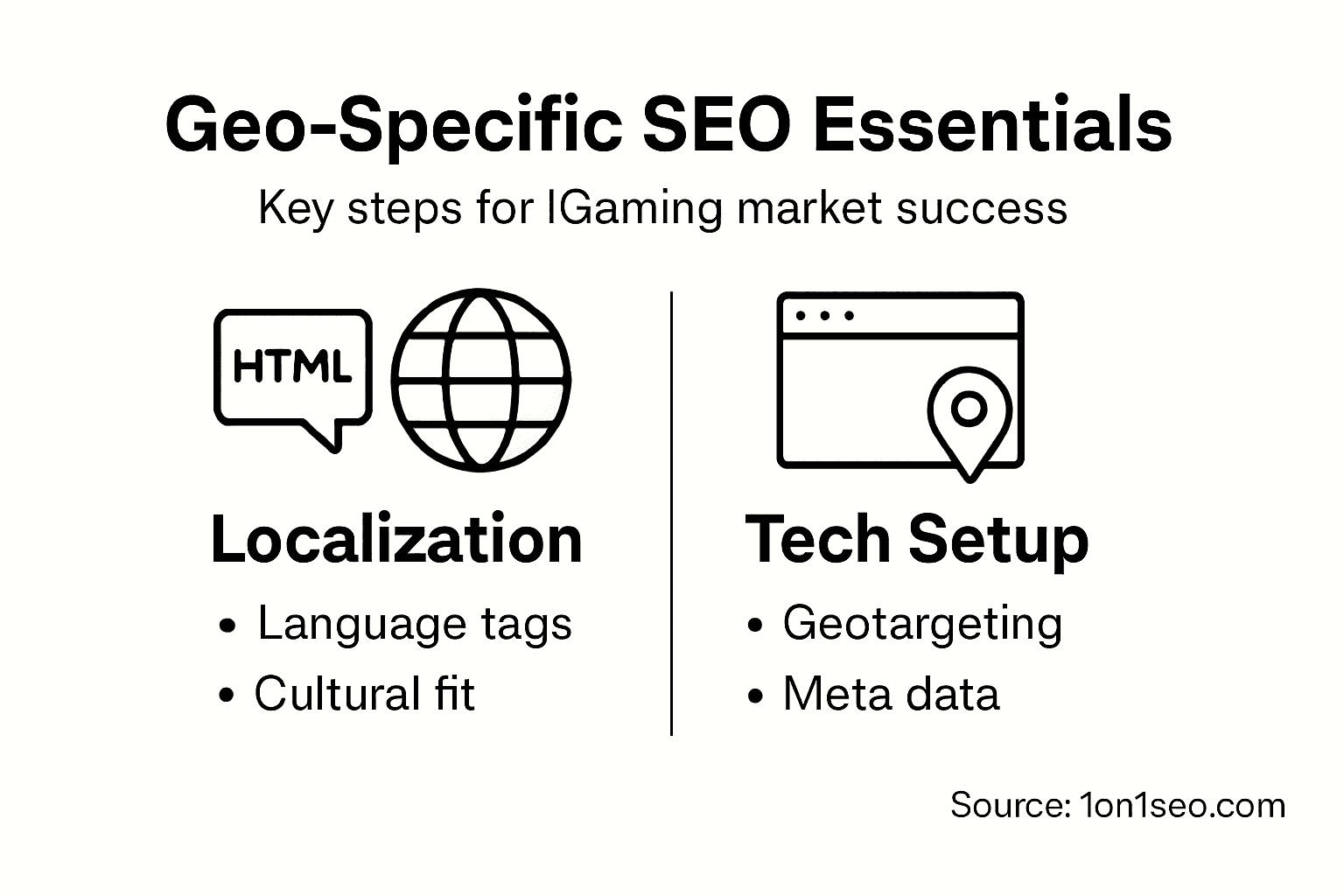
The operational mechanics of geo-specific SEO involve multiple sophisticated components. How to Grow AI Engine Engagement: A Step-by-Step Framework for AEO and SEO Success highlights the critical role of intelligent algorithms in understanding regional search patterns. Key operational elements include precise user intent mapping, structured data optimization for local search engines, and continuous algorithmic adaptation that ensures content remains discoverable and compliant across different geographic markets.
Technical implementation of these frameworks requires deep integration of localization strategies with advanced SEO techniques. This involves creating granular content taxonomies that account for linguistic variations, developing region-specific keyword clusters, and implementing technical infrastructure that supports rapid content indexing across different search platforms. Successful geo-specific SEO frameworks must balance global brand consistency with hyperlocal content relevance, creating a nuanced approach that resonates with regional audience expectations while maintaining technical search performance.
Pro tip: Develop a dynamic geolocation tagging system that automatically adjusts content metadata and structured data based on detected user region to maximize local search relevance.
Regulatory Compliance in International Markets
Regulatory compliance in international iGaming markets represents a complex, multi-layered challenge that demands sophisticated strategic approaches from digital marketing professionals. The global landscape of gambling regulations is characterized by significant variations across jurisdictions, requiring operators to develop nuanced, adaptive compliance frameworks that protect both business interests and user experiences.
Regulatory SEO Explained: iGaming Industry Guide highlights the intricate nature of navigating diverse legal environments. Key compliance considerations include jurisdiction-specific licensing requirements, anti-money laundering (AML) protocols, know-your-customer (KYC) verification processes, and stringent advertising standards that vary dramatically between regional markets. Successful international iGaming operators must implement flexible compliance strategies that can rapidly adapt to evolving regulatory landscapes while maintaining operational efficiency and market credibility.
The most effective regulatory compliance approaches integrate proactive risk management with comprehensive legal intelligence gathering. This involves developing robust internal compliance frameworks that go beyond minimal legal requirements, creating multi-tiered verification systems, and implementing advanced geolocation technologies that ensure strict adherence to regional gambling restrictions. Operators must also prioritize responsible gaming practices, developing transparent mechanisms that demonstrate commitment to user protection and sustainable gambling behaviors across different cultural and legal contexts.
Pro tip: Create a centralized compliance dashboard that continuously tracks regulatory changes across target markets, enabling real-time strategic adjustments to maintain legal and operational integrity.
This table highlights key compliance features and their impact for international iGaming operators:
| Compliance Element | Strategic Purpose | Operational Impact |
|---|---|---|
| Licensing Verification | Meets jurisdiction requirements | Enables legal market entry |
| AML & KYC Protocols | Prevents fraud and misuse | Reduces regulatory penalties |
| Responsible Gaming | Protects players and brand image | Builds long-term user trust |
| Advertising Standards | Maintains ethical promotion | Safeguards reputation and growth |
Risks, Pitfalls, and Compliance Mistakes to Avoid
Navigating the complex regulatory landscape of international iGaming demands a proactive and strategic approach to identifying and mitigating potential compliance risks. Digital marketing professionals must develop a comprehensive understanding of the multifaceted challenges that can derail operational success and expose organizations to significant legal and financial vulnerabilities.
Regulatory misinterpretation represents one of the most critical compliance risks in cross-market iGaming operations. Technical SEO for iGaming: Scaling and Crawl Success emphasizes the importance of technical infrastructure that supports rigorous compliance verification. Common pitfalls include inadequate understanding of jurisdiction-specific regulations, failure to implement robust know-your-customer (KYC) protocols, and insufficient documentation of compliance processes that can trigger immediate regulatory penalties or market exclusion.
Operators must establish comprehensive risk management frameworks that anticipate and address potential compliance challenges before they escalate. This involves developing sophisticated geolocation technologies, implementing multi-tiered verification systems, and creating adaptive compliance mechanisms that can rapidly respond to evolving regulatory landscapes. Critical focus areas include random number generator (RNG) certification, responsible gaming features, transparent advertising practices, and maintaining meticulous documentation of compliance efforts across different international markets.
Pro tip: Develop an automated compliance monitoring system that generates real-time alerts for regulatory changes, enabling proactive adaptation and minimizing the risk of unintentional regulatory violations.
Gain a Competitive Edge with Expert Cross-Market SEO Coaching for iGaming
Navigating the complexities of a cross-market SEO strategy in the iGaming sector requires deep expertise in regulatory compliance, geo-specific optimization, and content localization. Key challenges like adapting to diverse gambling laws, managing multilanguage keyword variations, and maintaining site crawl efficiency demand more than generic SEO knowledge. If you want to confidently optimize high-risk keywords across multiple regulated markets while ensuring responsible gaming signals boost your search rankings, specialized guidance is essential.
Our advanced coaching program at 1on1seo.com equips iGaming operators, affiliates, and agencies with proven frameworks tailored to overcome these hurdles. Learn to build authority through expert link acquisition strategies crafted for betting and casino niches, leverage AI responsibly to enhance content without triggering compliance issues, and implement geo-specific SEO frameworks that resonate on a local level. Don’t wait for costly regulatory mistakes or stagnant traffic growth. Visit 1on1seo.com today and start transforming your cross-market SEO approach into a strategic growth engine designed to dominate competitive, regulated iGaming SERPs.
Frequently Asked Questions
What is a cross-market SEO strategy in the iGaming sector?
A cross-market SEO strategy in iGaming involves crafting targeted, localized content that meets the specific regulatory and user experience requirements of different geographic regions, allowing operators to improve their organic visibility across various markets.
How does content localization impact SEO in iGaming?
Content localization enhances SEO by adapting gambling content to resonate with local audiences. This goes beyond simple translation; it requires understanding local preferences and regulations to create relevant content that engages users.
Why is regulatory compliance important in cross-market SEO for iGaming?
Regulatory compliance is crucial as it helps iGaming operators navigate the complex legal frameworks of different markets, ensuring adherence to licensing, advertising standards, and responsible gaming practices to avoid legal penalties and maintain market credibility.
What are some common pitfalls in cross-market SEO for iGaming?
Common pitfalls in cross-market SEO include regulatory misinterpretation, inadequate KYC protocol implementation, and insufficient documentation of compliance processes, which can lead to regulatory penalties and operational challenges.
Recommended
- SERP Feature Domination: iGaming SEO’s Competitive Edge
- 7 Steps to a Winning iGaming On-Page SEO Checklist
- Technical SEO for iGaming: Scaling and Crawl Success
- AI Search, User Intent, and Zero-Click Results in iGaming
- How Smart Search Backlink Strategies Help Small Businesses Outrank Big Competitors | Ibrandmedia
- Local vs National SEO Best for Business - Go Online Now